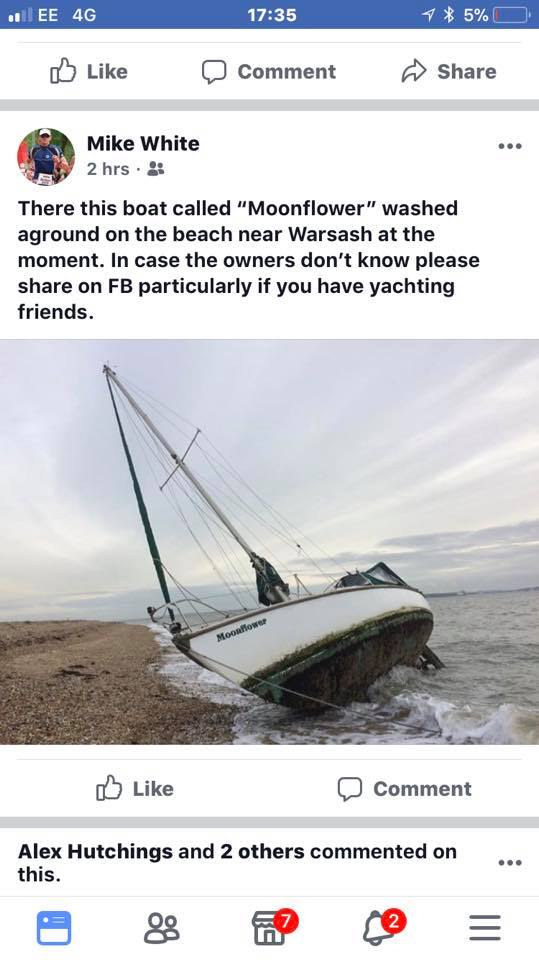
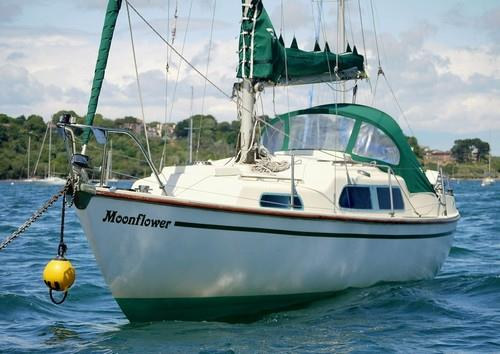
For the record, I recently inspected the hull of 'Moonflower', which was rescued from Hamble foreshore and has been on dry land at Hythe SC. There is absolutely no sign of damage or disturbance to the fin keel anchorage. Mind you, the top of the cast iron keel splays to about 300mm wide where it fits into its hull recess, so it is hardly surprising that the connection has proved robust. Some modern cruisers seem to be shedding their keels after quite modest impacts (which is presumably why the RYA examinations have made running aground a capital offence). Perhaps modern designers and regulators should take a look at 'Moonflower's' 50-year old design and learn from it.
Keith 66
#3
Do we know what year she was built? My sabre built in 71 has her keel bolted to a shallow stub moulded into the hull, at its widest the top of the keel is about 220mm wide, The bolts each end are on the centreline the rest are staggered towards the edge.
ken endean
#4
I've now looked at Alan Hill's original Sabre drawing, a small copy of which is in the handbook. He drew the keel casting as seen on Moonflower, with a wide top splay recessed into the hull. Another drawing, undated and possibly by Marcon, refers to eight keel bolts, all stainless and 9 inches long, tapped into the casting by 41/2 inches. This drawing also has a note stating that the mould has been modified (to give the GRP stub) but the modification is not drawn. Later drawings show the stub, with the keel casting having no top splay. The change in design may have been made very early, in which case Moonflower is a real old lady.
In the handbook, we stated that the later keels had seven studs, but there was some doubt over whether they were stainless. What about yours?
Ken
Keith 66
#5
My bolts are high tensile steel not stainless, despite this all but the front one were still mostly shiny with only faint rust. probably due to being glassed in so no oxygen.

 Sabre 27 Gallery
 Videos
 Specs
 Officers
 Shop
 Forum Archive
 Facebook
 Contact